
Granular activated carbon (GAC) is the workhorse of drinking water treatment. From municipal waterworks to point-of-use filters, GAC removes organic matter, residual chlorine, taste and odour compounds, and a wide range of micropollutants that can pass through sedimentation and filtration. Coal-based GAC is the most widely used grade because it combines high iodine value with low cost and dependable supply.
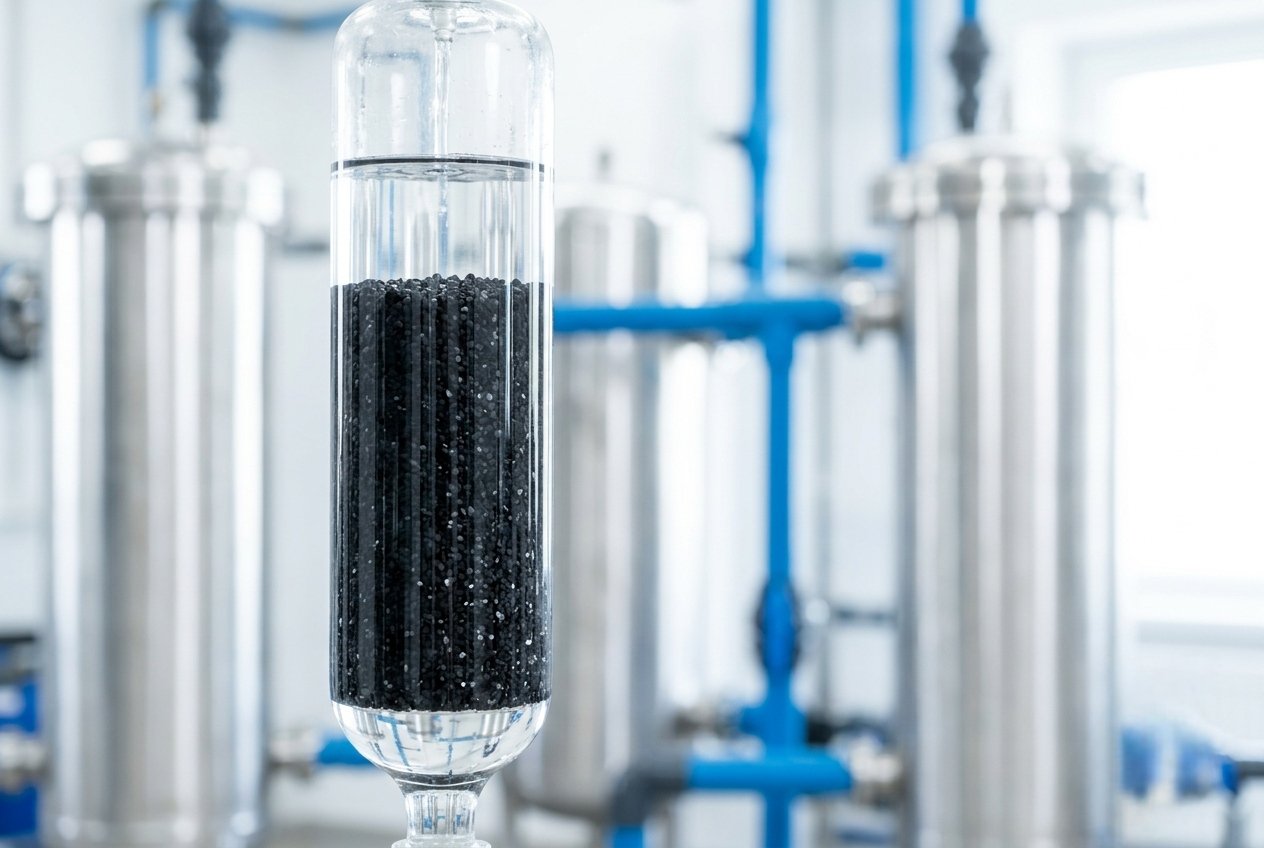
How Coal-Based GAC Purifies Water
Activated carbon removes contaminants by physical adsorption: water flows through a packed bed of carbon, and organic molecules become trapped inside the extensive internal pore network. A good drinking-water GAC has a high micropore volume for small molecules such as chlorine and THM precursors, balanced with mesopores that give faster adsorption kinetics. Coal-based carbon provides this balanced pore distribution, which is why it performs so well on raw and finished drinking water.
Key Specifications for Drinking Water
JYD coal-based granular carbon is available in mesh sizes from 8×16 to 8×30 and larger, with an iodine value range of 600 to 1100 mg/g depending on grade. For potable water applications we commonly supply:
Mesh size: 8×30 and 12×40 for standard filter beds; coarser 4–8 or 6–12 mesh for high-flow municipal vessels.
Iodine value: 850–1000 mg/g for chlorine and organic removal; higher values where taste-and-odour compounds dominate.
Hardness: ≥95% to minimise fines and maintain bed stability over many backwash cycles.
Ash content: ≤5–10% depending on grade, with acid-washed options where low leachables are required.
Coal vs Coconut GAC: Which One Should You Use?
Both are excellent adsorbents, but they suit different jobs. Coal-based GAC offers a wider pore-size distribution and is more economical for bulk municipal and industrial water treatment, where the load contains a mix of large and small molecules. Coconut-shell GAC is harder, more abrasion-resistant and slightly better on small molecules such as chlorine and micropollutants — it is the preferred choice for premium household filters and gold recovery. Many plants run coal GAC for primary polishing and coconut carbon for final taste-and-odour control.
Operating Tips for GAC Beds
Proper operation is as important as grade selection. New carbon should be backwashed and left to settle before being put online, to remove carbon fines that form during handling. During service, empty-bed contact time (EBCT) of 5 to 15 minutes is typical for drinking-water duty — longer contact improves removal of slower-diffusing compounds at the price of a larger bed. Backwash the bed regularly at a rate that expands the media about 20–30% to wash out accumulated solids, and reduce the rate gradually when switching back to service to avoid bed loss.
Track two simple indicators to know when the carbon is spent: the iodine number of a bed sample and the residual chlorine after the bed. When the iodine number drops toward the exhaustion point or chlorine breakthrough appears sooner than expected, it is time to replace or regenerate. Keeping a log of pressure drop and water quality also helps you spot problems in the pre-treatment — such as rising turbidity — before they damage the carbon.
FAQ
How often should GAC be replaced in a water plant?
Service life ranges from 1 to 3 years depending on raw-water quality, flow and organic load. Frequent monitoring of chlorine residual and iodine number tells you when the bed is exhausted.
Can GAC be regenerated?
Yes, thermally regenerated GAC typically recovers 70–90% of its original capacity, though some capacity loss per cycle is normal.
Do you supply NSF-certified grades?
JYD supplies drinking-water grades meeting food-grade and international quality standards, including grades certified for potable water use. Contact us for the certificate that applies to your market.
Need help selecting the right GAC for your waterworks or filter project? Send us your raw-water analysis and flow rate for a free grade recommendation and quotation.