192026-01
Activated Carbon for Mining Wastewater & Gold Recovery
How activated carbon treats mining wastewater and recovers gold in CIP/CIL circuits: grade

Applications / Catalyst Support
Loading Pd/Pt/Rh/Ni? Surface area and loading capacity are the core.
| Scenario | Requirement | Recommended | Key Spec |
|---|---|---|---|
| Precious-metal catalyst (Pd/Pt/Rh/Ni) | High loading, good metal dispersion | High-surface coconut / nutshell carbon | Iodine 1000–1500, SSA ≥1000 |
| Vinyl acetate synthesis catalyst | Specific pore structure, high strength | Catalyst support carbon | Iodine 1000–1500, hardness ≥95 |
| Hydrogenation & chemical catalysis | Reactor-durable | High-hardness granular carbon | Mesh by reactor |
Loading palladium, platinum, rhodium or nickel — the larger the surface area, the more active sites and the higher the loading. Iodine 1000–1500 is the mainstream range.
For vinyl acetate synthesis and other chemical processes, the carbon works long-term inside the reactor, so particle hardness must be high (≥95%).
Reflects surface area; 1000–1500 is the premium carrier range.
≥1000 m²/g; determines active-metal loading.
Pd / Pt / Rh / Ni; customized to the catalytic process.
4×8 / 6×12 mesh by reactor structure.
| Your Situation | Recommended | Product |
|---|---|---|
| Precious-metal catalyst carrier | Catalyst support carbon (iodine 1000–1500) | Catalyst Support Activated Carbon |
| Vinyl acetate synthesis catalyst | Catalyst support carbon (high-hardness granular) | Catalyst Support Activated Carbon |
| Hydrogenation & chemical catalysis | Catalyst support carbon (mesh by reactor) | Catalyst Support Activated Carbon |
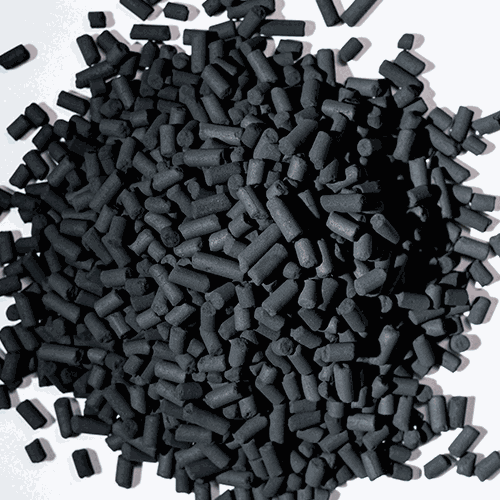
High surface area (iodine 1000–1500 mg/g, SSA ≥1000 m²/g) for metal dispersion, and high particle hardness (≥95%) to survive long reactor service.
Palladium, platinum, rhodium and nickel — the loadable metal is customised to your catalytic process.
The carrier is graded by process — vinyl acetate synthesis, hydrogenation and precious-metal catalysis each specify pore structure and mesh by reactor.
More surface area means more active sites and higher, more stable metal loading, which directly improves catalytic efficiency and metal dispersion.
How activated carbon treats mining wastewater and recovers gold in CIP/CIL circuits: grade
How activated carbon controls air emissions and cleans wastewater: the environmental appli
What separates a reliable activated carbon supplier: batch consistency, documentation, lea
Send us your requirements — we reply within 24 hours with a quotation and recommendation.