
Mining creates two very different needs for activated carbon. On one side, mines generate large volumes of wastewater that must be treated for cyanide, heavy metals and organic contaminants before discharge. On the other, the gold-recovery circuit depends on carbon that can load gold from a cyanide slurry and survive years of aggressive mixing. The same material serves both jobs, but the grades could hardly be more different.
Gold Recovery: Carbon That Works Hard
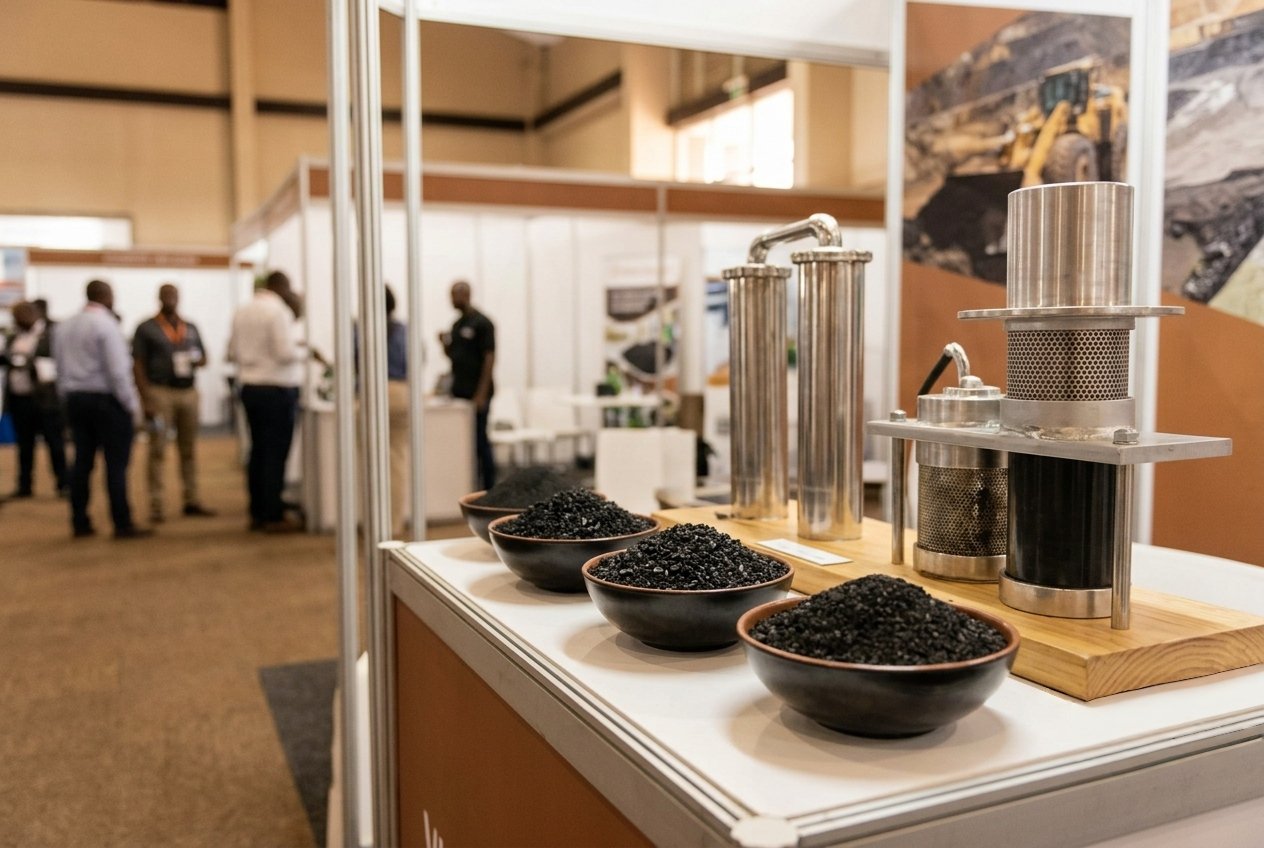
In carbon-in-pulp (CIP) and carbon-in-leach (CIL) circuits, granular carbon adsorbs the gold–cyanide complex from the ore slurry. This duty demands three things: a high iodine value to load gold fast, exceptional hardness to resist the abrasion of mixing with slurry, and consistent sizing to keep the moving bed stable. Coconut-shell carbon is the preferred material because its naturally dense structure delivers all three.
Typical gold-recovery specifications call for an iodine value of 1000–1100 mg/g and hardness above 97%. The hardness matters more than many buyers realise: hard carbon survives more reactivation cycles before it must be replaced, and replacement cost is the single largest operating cost in the circuit.
Mining Wastewater: Removing What Should Not Be Discharged
Mine water carries cyanide, dissolved metals and organic reagents that must be removed before discharge or reuse. Activated carbon is used to adsorb residual organics and, in the right configuration, to support cyanide destruction. Powdered carbon is dosed where a fast response is needed; granular carbon is used in fixed beds for continuous polishing of the treated effluent.
Specifying Carbon for Mining
For gold recovery, specify the mesh against your screen aperture — 6×12 and 8×16 are the common choices — and insist on a hardness test result, not just a datasheet claim. For wastewater, start with a jar test on your actual effluent to find the grade and dose that hit your discharge limits, then size the bed or dosing system around that result.
In both cases, consistency is the hidden requirement. Carbon that varies from batch to batch forces the plant to retune the circuit, and in gold recovery that costs real money. A supplier that tests every batch and provides the data with the shipment removes that uncertainty.
Mines often buy the two duties together, and the same supplier can serve both with very different grades. Standardising on one test-and-verify process — batch certificates, consistent iodine and hardness, and clear documentation — keeps both the recovery circuit and the effluent treatment running without surprises. When you shortlist carbon, ask how the supplier verifies every batch and how they handle grade changes, because in mining consistency is what converts a commodity purchase into predictable operating cost.
FAQ
Which mesh is best for a CIP circuit?
6×12 or 8×16 coconut carbon is standard; match the mesh to your screen aperture to prevent carbon loss and screen blinding.
What iodine value do gold plants need?
1000 mg/g and above is typical, with 1050+ preferred for fast loading and good reactivation economics.
Can activated carbon remove cyanide?
Carbon adsorbs organics and supports cyanide destruction in combination with chemical treatment; it is not a standalone cyanide removal step.
Send us your ore characteristics or wastewater analysis for a carbon recommendation and free sample.